Switchgear Suppliers UAE | Compare Prices, Top Brands & Stock Availability

Introduction: What Switchgear Suppliers Do and Why Selection Matters
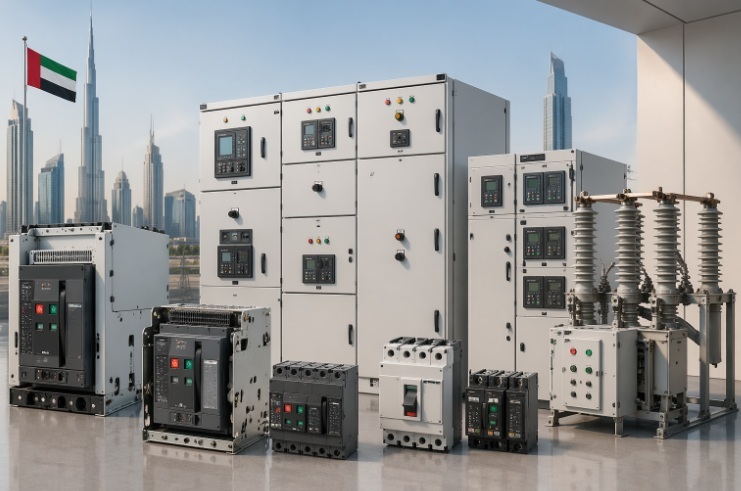
When experiencing a six-month delay in switchgear delivery, your project's timeline might be in jeopardy. In the UAE’s evolving infrastructure landscape, the choice of switchgear suppliers is crucial for project success. Switchgear suppliers in the UAE offer essential electrical protection and distribution systems, ensuring the security of electrical infrastructure for industrial facilities, commercial buildings, and critical infrastructure projects. Their expertise extends beyond simple product supply to include low voltage switchgear suppliers, medium voltage switchgear suppliers, motor control centers (MCC), power control centers (PCC), and distribution boards—each designed to prevent electrical faults, facilitate safe maintenance, and ensure a continuous power supply.
The UAE market offers unique procurement challenges. The reliance on imports adds vulnerability to supply chain disruptions, and supplier reliability can vary significantly. With the switchgear market in the UAE projected to reach USD 2.5 billion by 2033, there is increasing pressure on reliable suppliers.
Selecting the wrong supplier can lead to severe consequences. Custom-built switchgear requires 12-18 months of lead time, compared to 1-8 weeks for stocked alternatives. Such differences can derail entire projects. Imagine the costs and delays if a contractor discovers their supplier lacks proper IEC certifications three months into procurement. Beyond delays, suppliers failing to comply with standards may result in compliance issues and cost overruns, compromising safety standards and project budgets.
Choosing the right supplier ensures more than just products—they provide stock availability, technical expertise, and compliance assurance, helping keep projects on track efficiently.
Understanding Switchgear Types: LV, MV, and Application-Based Selection
Low Voltage vs Medium Voltage Switchgear
Low voltage (LV) switchgear handles electrical systems up to 1 kV, making it ideal for commercial buildings, offices, and light industrial facilities. LV systems are compact, modular, cost-effective, and easier to install. Medium voltage (MV) switchgear is suitable for 1-36 kV systems, required for heavy industrial plants, large data centers, and utility distribution networks.
These differences impact supplier selection. LV switchgear is modular and less expensive, while MV systems require larger equipment and a higher investment. Most UAE suppliers stock standard LV configurations, but MV switchgear often requires specialized suppliers with custom engineering capabilities and longer lead times.
Common Panels: MCC, PCC, and ATS
Motor Control Centers (MCC) group motor starters and protection devices, primarily used in factories and industrial plants to control multiple motors from a centralized location. Power Control Centers (PCC) distribute LV power in commercial buildings, providing circuit isolation and protection for different building zones.
Automatic Transfer Switches (ATS) facilitate seamless switching between primary and backup power sources, essential for maintaining uptime in data centers and hospitals. Data centers use ATS panels to prevent IT system downtime during power outages, while manufacturing facilities rely on MCC panels for motor reliability and production continuity.
Application-Based Selection
The industry dictates the switchgear type you need. Commercial buildings typically require LV systems under 1 kV, with PCC panels for floor-by-floor distribution. Industrial facilities need both LV for lighting and small equipment, plus MV for large motors and machinery.
Data centers demand high-reliability MV systems with redundant ATS configurations, while manufacturing plants rely on MCC panels for motor control. When sourcing in the UAE, ensure your supplier specializes in your voltage category. LV specialists may lack MV expertise, and vice versa, affecting stock availability and the quality of technical support.
Switchgear Selection Fundamentals: Ratings, Compliance, and Sizing
Choosing the right switchgear involves balancing three critical factors: matching electrical ratings with your system's demands, ensuring compliance with safety standards, and conducting load calculations to account for future growth. Missteps here lead to equipment failures, safety hazards, and costly replacements.
Current Rating and Fault Levels
Your switchgear must accommodate two distinct current scenarios. Continuous current rating specifies steady-state capacity, typically up to 10,000 amps for low-voltage systems. The short-circuit current rating (SCCR) is crucial as it specifies the maximum fault current your equipment can interrupt safely—generally between 65 and 200 kA.
The key risk: your lowest-rated component becomes your entire system's limiting factor. If your main breaker handles 100 kA but a downstream feeder breaker only manages 65 kA, your switchgear assembly carries a 65 kA rating. Undersizing fault ratings create catastrophic failure potential during short circuits.
Compliance Standards and Certifications
Your switchgear must meet established safety and performance standards like IEEE, ANSI, UL, and NEMA certifications, ensuring safe operation and regulatory compliance. These standards are essential for protecting your facility and personnel while supporting future inspections and insurance requirements.
Ensure certifications match your local jurisdiction requirements. Non-compliant equipment can void warranties, fail inspections, and expose liability during incidents.
Load Planning and Future Scalability
Start with a comprehensive load assessment covering voltage levels, amperage requirements, load types (motors, lighting, transformers), and duty cycles. This systematic evaluation prevents undersizing and identifies peak demand scenarios.
Plan for expansion early. Adding capacity later often requires complete switchgear replacement rather than simple upgrades. Size your system for projected growth over 10–15 years, considering new equipment additions, process changes, and facility expansion. This upfront capacity investment prevents expensive retrofits and downtime.
Switchgear Supply by Application: Requirements Across Industries
Different industries demand vastly different switchgear solutions, tailored to their unique power requirements, operating environments, and safety standards. Understanding these variations enables the selection of suppliers specialized in your specific application, providing the appropriate equipment with necessary certifications and support capabilities.
Comparison Table: Switchgear Requirements by Industry
|
Application |
Switchgear Type |
Voltage Level |
Key Requirements |
Supplier Capabilities Needed |
|
Industrial Plants |
Metal-clad/Metal-enclosed MV/HV |
Robust protection for heavy loads, fault isolation capability, harsh environment resistance |
Custom insulation systems (AIS/GIS), IoT monitoring integration, IEEE C37 compliance |
|
|
Commercial Buildings |
Metal-enclosed LV/MV |
Cost-effective solutions, easy maintenance access, indoor safety compliance |
AIS systems for simplicity, NFPA 70E workspace clearance standards |
|
|
Infrastructure/Utilities |
Pad-mounted MV/HV |
Outdoor weather resistance, tamper-proof design, grid reliability |
High durability for transmission & distribution, advanced arc reduction technology |
|
|
Data Centers |
Metal-clad LV/MV |
Maximum uptime requirements, rapid fault isolation, controlled cooling environment compatibility |
Draw-out circuit breakers, advanced diagnostic systems for minimal downtime |
Key Selection Insights: Industrial applications typically require higher-voltage systems due to energy-intensive operations, while commercial buildings favor medium-voltage AIS solutions for cost-effectiveness and future expansion flexibility. The global switchgear market is projected to reach $136 billion by 2030, largely driven by infrastructure upgrades and industrial automation.
Supplier selection should match these specific application requirements, ensuring appropriate voltage ratings, environmental protections, and compliance with standards such as IEEE, ANSI, IEC, and NFPA 70E.
Switchgear Supplier Types and Procurement Models
Sourcing switchgear in the UAE typically involves three main supplier models: original equipment manufacturers (OEMs), authorized distributors, and system integrators. Each model offers distinct advantages based on your project needs, timeline, and customization requirements.
OEM Direct vs Distributor Access
Understanding the trade-offs between supplier types aids in choosing the right procurement approach for your specific project needs.
|
Supplier Type |
Stock Availability |
Lead Time |
Pricing |
Customization |
Technical Support |
|
OEM Direct |
Limited local stock |
12-18 weeks standard |
Volume discounts |
Full customization |
Factory-level expertise |
|
Authorized Distributor |
Local inventory |
1-8 weeks |
Competitive markup |
Standard configurations |
Local technical team |
|
System Integrator |
Project-based |
Varies by source |
Value-added pricing |
Application-specific |
Engineering services |
OEMs like Schneider Electric or ABB provide direct access to their complete product range and engineering capabilities but require larger minimum orders and longer lead times. Distributors maintain local stock of standard configurations, enabling quicker project execution with smaller order quantities.
The Authorized Distributor Advantage
Working with authorized distributors provides several benefits over non-authorized suppliers. Authorized distributors offer genuine products with manufacturer warranties, access to the latest firmware updates, and direct OEM technical support channels.
Additionally, authorized suppliers ensure compliance documentation meets UAE regulatory requirements and can provide necessary project approval certificates of conformity. They often maintain relationships with multiple OEMs, providing a more comprehensive product selection and competitive pricing through their procurement networks.
Non-authorized suppliers might offer lower initial prices but often lack technical support, warranty coverage, and compliance documentation—risks that can lead to significant project delays and added costs.
Installation, Availability, and Procurement Best Practices
Successful switchgear procurement necessitates strategic planning, dependable supplier relationships, and proactive risk management. The UAE market presents unique challenges, including extended lead times, compliance requirements, and stringent environmental conditions affecting equipment specifications and procurement timing.
Procurement Planning and Bulk Orders
Early Coordination and Planning
- Conduct detailed pre-installation meetings with clients, consultants, and site supervisors to review layout drawings, structural requirements, and access routes before placing orders.
- Plan procurement 3-6 months in advance for standard equipment and 12-18 months for custom switchgear to avoid delays.
- Consolidate orders across project phases to leverage bulk pricing and minimize administrative overhead.
Strategic Supplier Partnerships
- Partner with suppliers offering pre-engineered busbar systems and pre-terminated components to cut on-site assembly time.
- Request installation manuals, training materials, and technical briefings during procurement for team readiness.
- Establish framework agreements with authorized distributors for consistent pricing and priority stock allocation.
Stock Availability and Lead Time Management
Real-Time Stock Verification
- Confirm actual stock availability rather than relying on catalog listings, especially for critical milestones.
- Identify alternative suppliers and equivalent models during the planning phase to stay flexible.
- Monitor supply chain disruptions and seasonal demand patterns affecting availability.
Lead Time Optimization
- Prioritize suppliers with local stock for urgent requirements and minimized lead times.
- Plan sequential deliveries for large projects to optimize cash flow and storage needs.
- Build buffer time into plans for potential supply delays or specification changes.
Common Sourcing Mistakes to Avoid
Compliance and Standards Failures
- Ensure all equipment meets UAE standards and DEWA compliance before ordering to prevent rejection during inspection.
- Confirm certification documentation availability and validity for local authorities.
- Include proper earthing, bonding, and safety specifications in procurement contracts.
Environmental and Technical Oversights
- Account for UAE's challenging climate in equipment specs, including ventilation and heat dissipation requirements.
- Specify calibrated installation tools and proper torque specs to prevent connection failures.
- Maintain detailed documentation throughout the procurement process, including marked-up drawings and field changes.
How AGEA Simplifies Switchgear Sourcing and Procurement
Traditional switchgear procurement involves lengthy RFQs, limited supplier visibility, and fragmented sourcing across various vendors. AGEA revamps this process, consolidating inventory, pricing, and technical support into a digital platform tackling procurement challenges in the UAE market.
Real-Time Inventory and Instant Pricing
Problem: Procurement delays and opaque pricing
- AGEA offers real-time inventory visibility across suppliers, eliminating the uncertainty of lead time delays prevalent in fragmented switchgear markets.
- The platform reduces procurement cycles by up to 50% compared to manual quoting processes.
- Instant pricing transparency replaces traditional RFQ cycles, enabling 20-30% cost savings through competitive benchmarking without extensive negotiations.
Access to Leading Switchgear Brands
Problem: Limited supplier options and multi-vendor complexity
- AGEA aggregates top switchgear brands, including Schneider Electric, Eaton, and Rockwell Automation, in a single platform.
- This removes the burden of negotiating with multiple suppliers for various voltage levels or panel types.
- Users have access to broader product portfolios—from Form 4 enclosures to GIS systems—ensuring compliance options for industrial and utility projects.
Bulk Procurement and Project Support
Problem: Scale inefficiencies and supply bottlenecks
- AGEA supports bulk orders with modular components enabling parallel manufacturing, reducing lead times by 40% over custom systems.
- The platform facilitates large-scale procurement for commercial and industrial sites through streamlined bulk upload and LPO support.
- Project scalability eliminates the supply bottlenecks that cause delays in conventional single-supplier procurement models.
Technical Consultation and Engineering Support
Problem: Expertise gaps in complex specifications
- AGEA provides expert guidance on switchgear specifications, supporting systems up to 20kV/2500A.
- Technical consultancy minimizes specification errors that lead to compliance failures or performance issues.
- The platform supports complex applications like data centers, industrial plants, and infrastructure projects requiring specialized protection schemes.
Streamlined Digital Procurement
Problem: Manual processes and excessive documentation
- AGEA's digital platform enables end-to-end ordering for switchgear, UPS systems, and related components with a 30-50% reduction in custom engineering time.
About the Author

Related Posts
Circuit Breakers in UAE: Types, Standards & Selection Guide for Contractors