Electrical Socket Types for UAE & GCC: Industrial Standards, Compatibility & Selection Guide


Electrical socket types assist contractors, engineers, and procurement teams in comprehending industrial standards, tackling compatibility challenges, and mastering selection strategies for electrical socket types in the UAE and GCC markets. For those keen to find out what socket type is used in UAE, the region primarily uses the Type G (BS 1363) British standard with three rectangular pins and built-in safety features, operating at 230V/50Hz. Compatibility issues may arise with mismatched European Type C/F or legacy Type D plugs, leading to installation failures and costly delays. Understanding proper socket specifications and strategies to choose the right sockets eliminates sourcing errors, ensures regulatory compliance, and prevents equipment mismatches that can impact project timelines. Explore compatible socket options.
Introduction: Understanding Electrical Socket Types for UAE and GCC Projects
Electrical socket types define the physical configuration of plugs and outlets, voltage specifications, and grounding systems vital for safe power distribution across regions. For contractors, engineers, and procurement teams working in the UAE and GCC, comparing these standards is critical for project success and safety compliance.
Incorrect socket selection can cause significant project risks. Safety hazards emerge when voltage and grounding configurations do not match equipment requirements, potentially damaging machinery or creating fire and electrocution risks. Compliance failures can occur when installations violate local codes, leading to project setbacks. Specification errors discovered during commissioning require emergency rework and extended timelines. Browse certified socket types.
The regional challenge amplifies these risks across GCC markets. While the UAE standardizes on Type G sockets operating at 230V, 50Hz for installations, neighboring countries present mixed standards that complicate comparisons for cross-border projects. For instance, Saudi Arabia uses multiple types (A, B, C, G) with varying voltages, while other GCC states maintain their own specifications. This diversity of standards in the GCC necessitates a thorough understanding of regional requirements for effective project planning and execution.
Consider a common scenario where US-sourced equipment arrives with 120V Type A plugs for a UAE facility requiring 230V Type G connections. Without proper planning, this mismatch forces emergency procurement of voltage converters, rewiring work, and potential equipment damage, extending project schedules and increasing electrical installation budgets by 10-15%.
UAE and GCC Domestic Socket Standards: The Type G Dominance
Type G (BS 1363) serves as the mandatory domestic socket standard for UAE projects across the UAE and GCC, specified for all new residential and commercial installations. This British-origin standard underpins electrical infrastructure from Dubai's high-rises to Riyadh's industrial complexes, ensuring consistent compatibility and safety.
Type G Technical Specifications for Contractors
Type G sockets operate at 230V (+/-6%) and 50Hz, supporting maximum loads of 13A through fused plug configurations available in 3A, 5A, and 13A ratings. The distinctive three-pin design features rectangular live and neutral pins plus a larger rectangular earth pin.
Critical safety features include built-in plug fuses, automatic shutters, and mandatory grounding. These are essential in the GCC's dusty environments where debris can compromise electrical connections. The widespread adoption of Type G in the GCC enhances safety and facilitates international compatibility within regional projects.
Legacy Plug Types in Retrofit Projects
Types D and M—round-pin Indian and British colonial standards—persist in older UAE buildings but create significant retrofit challenges. These legacy systems lack the fused protection and shuttered safety of Type G, presenting shock risks, especially in humid coastal areas and sand-prone inland locations.
- Avoid this if: Your project targets new infrastructure or retrofits aiming for current safety standards.
- Recommended for: Short-term retrofits where complete rewiring isn’t feasible.
For retrofit projects, avoid force-fitting incompatible plugs. Compare possible solutions such as upgrading circuits to Type G where possible, or use properly rated adapters (maximum 13A/3kW) as temporary solutions only. The investment in Type G conversion enhances safety and equipment compatibility across GCC countries, aligning with regional safety norms.
|
Feature |
Type G (BS 1363) |
Type D (Legacy) |
IEC 60309 (Industrial) |
|
Pin Configuration |
3 rectangular/230V |
3-round/230V |
3-5 rounds/230-400V |
|
Current Rating |
13A fused |
5-10A unfused |
16-63A |
|
Key Advantage |
Shutters, fuse, residential safety |
Compact size |
High-power, weatherproof |
|
Main Limitation |
Bulkier profile |
No fuse/shutters, shock risk |
Oversized/costly for domestic use |
|
Domestic Suitability |
Optimal choice |
Retrofit situations only |
Not recommended |
Interested in ensuring seamless compatibility? Discover the best practices and certified products to achieve optimal integration for your projects. Optimize your selection today!
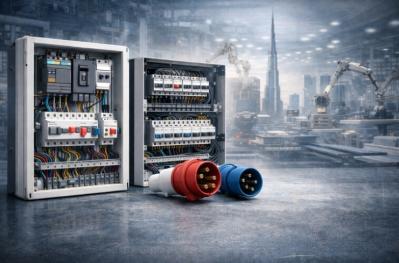
Industrial Socket Standards: Mastering IEC 60309 for Heavy-Duty Applications
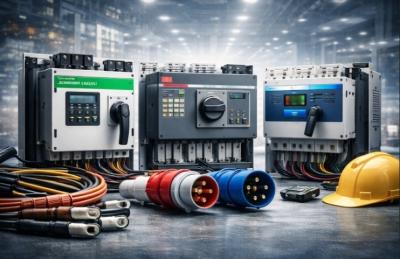
When your UAE project requires a strategic choice beyond standard domestic sockets, IEC 60309 industrial connectors provide the heavy-duty performance you need. This international standard supports voltages up to 1000V AC/DC and currents reaching 800A, far exceeding Type G's 230V, 13A limitations. Its compatibility with varying power requirements makes it suitable for diverse GCC industrial applications.
- Best for: Industrial installations that demand higher voltage or current requirements than domestic standards can support.
IEC 60309 connectors feature keyed designs that physically prevent dangerous voltage mismatches, making them essential for data centers, manufacturing facilities, and industrial installations across the GCC.
IEC 60309 Voltage Color Code for UAE Projects
The color coding system eliminates guesswork in specification and installation:
- Blue: 200-250V (matches UAE's 230V supply)
- Red: 380-480V (three-phase industrial equipment)
- Yellow: 100-130V (North American equipment integration)
- Green: High-frequency applications (100-500Hz)
This visual identification system helps find and use the correct connector for each application's voltage requirements, preventing costly wiring errors and ensuring compatibility with GCC market demands.
IP Ratings for Harsh GCC Environments
GCC projects face extreme conditions—sand, humidity, and temperature fluctuations that destroy standard connectors. IEC 60309 sockets offer an IP44 rating for general industrial use, or an IP67 rating for outdoor installations.
- Best for: Outdoor, highly rigorous environments demanding robust protection.
- Avoid this if: The application is strictly for indoor, sheltered use with minimal dust or moisture concerns.
Choose IEC 60309 over Type G for projects involving three-phase power, currents above 16A, outdoor installations, or equipment requiring environmental protection beyond IP20. The upfront cost difference pays for itself through reduced maintenance and improved safety compliance, particularly important in diverse GCC climates.
Adhering to GCC Standards for Industrial Applications
Conforming to GCC industrial standards involves aligning socket specifications with regional safety and performance requirements. Each GCC country has its nuanced regulations, often requiring manufacturers and contractors to bridge international standards like IEC 60309 with national codes to ensure full compliance and operational safety in heavy-duty environments across the UAE, Saudi Arabia, and beyond.
Global Electrical Socket Type Reference: A Contractor's Comparison Guide
Careful comparison of socket compatibility prevents costly procurement mistakes when sourcing equipment globally. This reference table highlights key specifications for GCC project procurement decisions and can serve as an electrical socket compatibility guide.
|
Socket Type |
Pin Configuration |
Grounded |
Voltage/Frequency |
Primary Regions |
GCC Compatibility |
|
Type A/B |
2/3 flat pins |
B only |
100-127V/60Hz |
North America, Japan |
No - voltage mismatch |
|
Type C |
2 round pins |
No |
220-240V/50Hz |
Europe, Africa, Asia |
Partial - requires adapters |
|
Type E/F |
2 round pins + ground |
Yes |
220-240V/50Hz |
Continental Europe |
Partial - different grounding |
|
Type G |
3 rectangular pins |
Yes |
220-250V/50Hz |
UK, GCC, Singapore |
Full compatibility |
|
Type I |
2/3 angled flat pins |
Yes |
220-240V/50Hz |
Australia, China |
No - incompatible shape |
Using Global Socket Standards for Procurement Decisions
Type G's dominance across GCC markets for installations provides procurement advantages. Find direct sourcing options from UK, Malaysian, and Singaporean suppliers without voltage converters or adapters, reducing project costs by 15-20% compared to custom solutions. A socket types comparison chart can be beneficial for highlighting these differences clearly.
The biggest procurement trap involves North American equipment. These Type A/B sockets operate at 100-127V, necessitating expensive voltage conversions that can delay commissioning.
- Avoid this if: Your equipment must seamlessly connect without modifications for UAE compatibility.
For maximum flexibility, prioritize suppliers offering Type G/C hybrid sockets. These accommodate both GCC standard equipment and European imports, simplifying inventory management while maintaining full local compliance.
Voltage Compatibility and Equipment Safety: Avoiding Costly Mismatches
Comparing voltage and frequency compatibility between imported equipment and UAE electrical standards can prevent safety risks and project delays. Understanding these issues is crucial to avoid costly equipment failures and ensure safe installations across GCC projects.
The North American Equipment Trap: 120V vs 230V
The most common compatibility error involves choosing North American equipment rated for 120V into the UAE's 230V electrical system. 120V devices connected directly to 230V outlets draw excessive current, causing immediate component damage, overheating, or fire hazards.
- Avoid this if: Procuring electrical equipment specifically for the UAE market.
- Recommended for: Projects exclusively utilizing US market equipment with comprehensive conversion strategies.
This issue is common when comparing options for power tools, HVAC units, or lighting systems from US suppliers. Without proper voltage conversion, these devices fail upon connection, leading to equipment replacement costs and project delays that can exceed AED 20,000 for mid-sized installations.
Frequency Mismatch Impact on Motors and Timing Equipment
Beyond voltage compatibility, frequency differences impact motor performance and timing accuracy. UAE's 50Hz standard compared to North America's 60Hz affects motor speeds and timing device accuracy. Motors designed for 60Hz operation run approximately 17% slower on 50Hz power, reducing efficiency and causing overheating in pumps, fans, and compressors.
Timing equipment also suffers as clocks, timers, and systems calibrated for 60Hz lose accuracy on 50Hz power, drifting by several minutes daily.
- Avoid this if: Your equipment precision requirements are stringent without feasible compensatory measures.
Choose wisely by following this decision framework to avoid compatibility issues: First, verify equipment voltage ratings—devices marked 220-240V work directly with UAE power. Equipment rated 100-120V requires step-down transformers. Next, check frequency compatibility—motors and timing devices should specify 50Hz operation or dual-frequency capability. These mismatches cause 10-20% of commissioning delays in UAE projects, making upfront verification essential.
UAE Compliance and Procurement Best Practices for Socket Selection
Finding your way in UAE's electrical compliance landscape requires understanding the regulatory framework that governs socket selection and implementing systematic procurement practices to avoid costly project delays.
ECAS and ESMA: UAE's Electrical Safety Framework
Emirates Authority for Standardization and Metrology (ESMA) establishes federal quality and safety benchmarks for electrical products, including socket components. As the primary standards body, ESMA ensures compliance with UAE and GCC standards like BS 1363 for domestic applications.
The Emirates Conformity Assessment Scheme (ECAS) serves as ESMA's mandatory certification program for low-voltage equipment operating between 50-1000V AC or 75-1500V DC. This includes all electrical socket types chosen for UAE projects. ECAS certification involves accredited testing, ECAS logo placement, and valid Certificates of Conformity for market access.
The regulatory framework tightened in 2012 when ESMA banned uncertified electrical adaptors due to safety hazards, making compliance verification essential for all socket components.
5-Step Procurement Checklist for Compliant Socket Selection
- Compare Certifications: Confirm ECAS, EQM (Emirates Quality Mark), or G-Mark certifications through supplier documentation and ESMA's online portal. Reject any uncertified items regardless of price advantages.
- Check Product Scope: Ensure socket specifications fall under the low-voltage electrical category and meet BS 1363 or equivalent standards.
- Review Test Reports: Require CB test reports (maximum 3 years old), RoHS compliance documentation, and UAE-specific test results from accredited laboratories.
- Cross-Reference Local Rules: Align socket selections with DEWA or ADDC approved vendor lists and verify compatibility with local circuit load guidelines.
- Inspect Labeling and Documentation: Validate proper ECAS logo placement, notified body numbers, importer trade license information, and MoIAT registration for full traceability.
Non-compliance carries significant risks. Failed inspections can trigger delays, expensive rework, and regulatory penalties that outweigh initial cost savings from uncertified components. Prioritizing certified sourcing from the procurement stage eliminates these risks.
Emphasizing Regional Standards for Compliance
Compliance also entails understanding specific requirements and expectations across GCC countries, where regulations might differ slightly from those of the UAE. Ensuring adherence to all local frameworks, such as the Saudi Standards, Metrology, and Quality Organization (SASO) in Saudi Arabia or the Civil Defense standards in Qatar, guarantees that all electrical installations are safely and legally executed. Emphasizing regional standards ensures smooth project operations across diverse GCC territories.
How to Choose the Right Electrical Socket Type for Your Application
Selecting the correct electrical socket type for UAE and GCC projects requires a systematic approach that balances technical requirements with regional standards. Follow this framework to avoid costly specification errors and ensure project compliance.
- Discover Your Application Requirements
Start by determining your power and load specifications. For residential and light commercial applications, Type G sockets handle up to 13A at 220-240V. Industrial applications requiring higher loads, three-phase power, or harsh environment operations need IEC 60309 industrial sockets. Document your voltage, current, and phase requirements.
- Best for: Residential and light commercial applications meeting UAE standards.
- Avoid this if: The project involves industrial machinery exceeding Type G capacities.
- Align with Regional Standards
Prioritize BS 1363 Type G sockets for standard applications, as over 90% of UAE and GCC new builds use this standard. Favor IEC 60309 when finding solutions for industrial equipment and specialized applications. Only include legacy Type D or Type C for retrofit projects where existing infrastructure demands compatibility.
- Assess Infrastructure Compatibility
Match your socket selection to existing electrical panels and distribution systems. UAE's standard 230V/50Hz grid works seamlessly with Type G installations. For equipment from different regions, evaluate whether adapters suffice for temporary use or if permanent socket replacement provides better long-term reliability.
- Factor Environmental Conditions
Compare the installation environment. Outdoor installations in GCC's harsh climate require IP-rated IEC 60309 sockets for dust and heat protection. Indoor commercial spaces benefit from Type G sockets with integrated switches for enhanced safety and user control.
- Verify Safety and Compliance Requirements
Ensure your selected sockets include proper fusing, grounding, and meet UAE Civil Defence standards. Recent Abu Dhabi projects that upgraded from legacy Type D to Type G systems reduced electrical faults by 40%, demonstrating the safety benefits of compliance.
This approach eliminates guesswork and reduces specification errors that can delay project commissioning and increase costs, making it an effective electrical socket compatibility guide.
Common Electrical Socket Selection Mistakes to Avoid
Avoid these mistakes that frequently cause project delays and safety hazards in UAE and GCC installations:
- Using Non-Compliant Socket Types: Selecting sockets without ESMA certification or Emirates Quality Mark (EQM), or choosing non-Type G (BS 1363) standards in UAE markets.
- Consequences: Safety risks, failed inspections, project delays, and rework costs.
- Prevention: Source from certified suppliers and verify Type G compatibility for UAE's 230V/50Hz standard.
- Incorrect Polarity and Wiring Configuration: Swapping live/neutral connections or using the wrong wire gauges.
- Consequences: Equipment malfunctions and fire risks from electrical shorts.
- Prevention: Use socket testers before energizing circuits and match wire specifications to circuit requirements.
- Inadequate Earthing Protection: Issues like poor earth continuity or unsleeved earth wires.
About the Author

Related Posts
Circuit Breakers in UAE: Types, Standards & Selection Guide for Contractors