Automatic Transfer Switch Selection Guide UAE: Types, Sizing & Schneider, ABB, Eaton Comparison

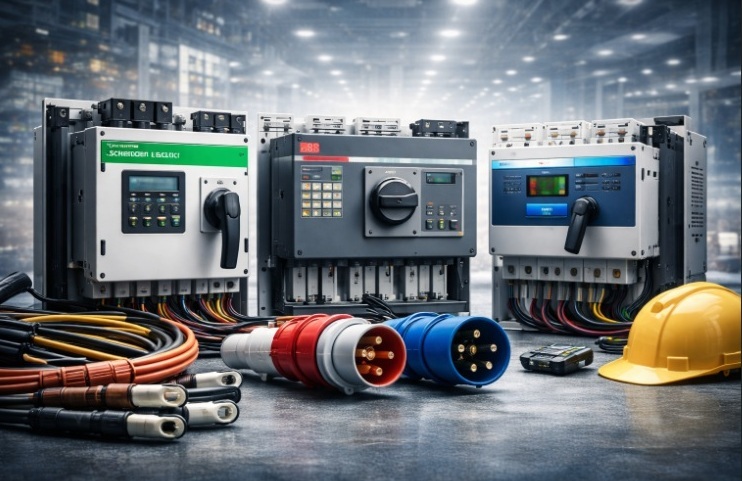
This guide explores crucial considerations for electrical contractors, system integrators, and procurement teams managing power systems in the UAE. Key challenges include power downtime from inadequate withstand ratings, incorrect transfer switch sizing leading to system overloads, and sourcing delays affecting project timelines. Moving forward, this guide addresses ATS types, transfer switch types comparison, and comparisons of Schneider Electric, ABB, and Eaton solutions, helping you select the appropriate transfer switch based on application requirements, load compatibility, and brand reliability for critical power applications. Understanding compliance with IEC 60947-6-1 standards and adherence to local authority requirements such as DEWA (Dubai Electricity and Water Authority) and ADDC (Abu Dhabi Distribution Company) is vital for ensuring reliable and regulatory-compliant solutions. For more detail, refer to our comprehensive ATS sizing guide.
Quick Selection Checklist
Here is a quick checklist to guide your transfer switch selection:
- Evaluate Power Requirements
a. Assess critical load needs and interrupt tolerance.
2. Determine Transition Type
a. Choose between open, closed, delayed, or soft loading transitions.
3. Review Brand Offerings
a. Consider specifications from Schneider Electric, ABB, Eaton, or other leading brands.
4. Check Environmental Suitability
a. Ensure the switch meets specific NEMA ratings for your installation site. In the following section, considerations include temperature extremes, humidity, and potential exposure to sand and dust typical to the GCC.
5. Validate Regulatory Compliance
a. Confirm adherence to local codes and standards, including IEC 60947-6-1 compliance and specific approvals from DEWA and ADDC.
6. Consider Pricing and Cost Factors
a. Evaluate the initial investment and long-term costs, including maintenance and potential downtime savings.
7. Assess Lead Times and Stock Availability
a. Understand standard transfer switch lead times versus stocked units to better manage project timelines and avoid delays.
How to Choose the Right ATS in 3 Steps
Selecting the right transfer switch requires a structured approach to ensure it meets your specific needs while aligning with operational and financial constraints. Here is a simple 3-step decision framework to guide your choice:
Step 1: Assess Your Power Requirements and Load Sensitivity
Determine the criticality of the loads you need to support and assess the power requirements. Consider the operational impact of power interruptions and choose a transfer switch type that aligns with your tolerance for downtime, e.g., open, closed, delayed, or soft loading transitions.
Step 2: Review Brand Offerings and Specifications
Evaluate the transfer switch solutions offered by Schneider Electric, ABB, and Eaton or other leading brands available. Focus on key specifications such as amperage rating, inrush current handling, phase matching, and control systems for seamless integration with existing infrastructure.
Step 3: Consider Environmental, Regulatory, and Cost Factors
Ensure the selected switch meets environmental conditions specific to your installation location, and choose a NEMA-rated enclosure accordingly. Additionally, verify compliance with local codes and standards to avoid regulatory setbacks. This includes ensuring compliance with IEC 60947-6-1 and securing DEWA or ADDC approvals where necessary. Additionally, take into account the upfront cost, potential energy savings, and overall lifecycle costs associated with the transfer switch you choose. Understanding the differences between standard lead times and available stock can greatly affect procurement decisions and project scheduling.
Mid-Content Conversion Trigger:
As you consider these critical factors, it may be beneficial to compare ATS options across major brands. This can provide insights into the competitive advantages and unique offerings of Schneider Electric, ABB, Eaton, and others, ultimately guiding you toward the best decision for your specific use case. For more assistance, explore our resources or contact us for personalized recommendations.
For expanded guidance on selecting and sizing your transfer switch, see our comprehensive ATS sizing guide.
Introduction: Understanding Automatic Transfer Switches for Critical Power Systems
A transfer switch monitors primary and alternate power sources and automatically transfers critical loads to backup generators or utility feeds within seconds of utility failure. It then retransfers upon restoration, mitigating risks such as equipment damage, data loss, halted production, and compliance violations, which can be costly for large enterprises.
To continue, transfer switches are vital infrastructure for uninterrupted operations, ensuring seamless power transitions that protect critical systems from utility failures while maintaining regulatory compliance. For electrical contractors, system integrators, and procurement teams, selecting the right switch configuration, sizing, and brand is essential for preventing costly downtime and ensuring business continuity in the GCC's demanding industrial environments.
Types of Transfer Switches: Choosing the Right Configuration
Selecting the optimal switch type involves aligning transition methodology with your application's tolerance for power interruption and operational criticality. Throughout the next section, four primary configurations dominate industrial installations, each tailored to specific load sensitivity and budget constraints.
|
Switch Type |
Transition Method |
Best For |
Key Limitation |
|
Open Transition (Break-Before-Make) |
Brief power interruption during source switching |
Standard commercial applications, non-critical loads |
2-second power gap disrupts sensitive equipment |
|
Closed Transition (Make-Before-Break) |
Parallels sources briefly for seamless transfer |
Hospitals, data centers, mission-critical systems |
Requires synchronization equipment; higher cost |
|
Delayed Transition |
Intentional delay prevents inrush current damage |
Heavy industrial motors, transformers with high inrush |
Extended interruption unsuitable for time-sensitive operations |
|
Soft Loading Transfer |
Gradual load ramping with make-before-break switching |
High-availability facilities, generator testing scenarios |
Complex control systems increase maintenance requirements |
Choose open transition for reliability in standard applications where brief interruptions are acceptable. Select closed transition when zero downtime is mandatory for critical infrastructure. Opt for delayed transition with inductive loads prone to startup surges, and consider soft loading for facilities requiring seamless power quality during testing cycles.
Example and Explanation of Inrush Current:
Inrush current is a spike in electrical current that occurs when a device is powered on, such as a motor or compressor starting up. This initial surge can be significantly higher than the device's normal operating current. For instance, when a large motor starts, it can draw several times its full-load current, which can strain the power system and potentially cause nuisance tripping of circuit breakers if not properly managed. Nuisance tripping, where protection devices like breakers trip unnecessarily, can lead to abrupt halts in production and associated downtime costs. If not adequately handled, inrush current can also cause equipment failure due to repeated stress on electrical components. Understanding and accommodating inrush current in transfer switch sizing and selection is crucial for reliable power transition without unintended interruptions.
ATS vs Manual Transfer Switch Comparison
In critical power system applications, the choice between an automatic transfer switch and a manual transfer switch can significantly impact system performance and reliability. Moving forward, here’s a comparison highlighting key points:
Automation
- Automatic Transfer Switch (ATS): Provides automatic load transfer, eliminating the need for human intervention during a power outage. This ensures minimal disruption and is critical for operations requiring uninterrupted power.
- Manual Transfer Switch: Requires physical switching by an operator, introducing delays and the potential for human error.
Response Time
- ATS: Transfer time is usually between 1 - 6 seconds, allowing for rapid response to power failures and quick restoration.
- Manual Transfer Switch: Response time is dependent on manual action, which can vary greatly, leading to potential extended downtime.
Risk
- ATS: Reduces risk by ensuring consistent and predictable power transfer, minimizing human error, and providing automatic fail-safes.
- Manual Transfer Switch: Increases the risk of errors and delays due to the reliance on manual operation and the variability of human response.
Cost
- ATS: Higher initial investment due to automation and integration capabilities, but may result in lower operational costs due to reduced downtime.
- Manual Transfer Switch: Lower initial cost, but potential for higher operational costs in critical applications due to increased downtime and risks.
How Automatic Transfer Switches Work: Core Components and Operation
Transfer switches monitor primary power sources using built-in sensors that continuously assess voltage, frequency, and phase stability. Upon recognizing change, when these sensors detect utility failures such as voltage drops or outages, the switch signals your backup generator to start while preparing for load transfer, preventing false switching by monitoring all electrical phases for accurate failure identification.
The transfer process moves your electrical load to the backup source once the generator reaches stable operating parameters. During this phase, the switch employs either open or closed transition mechanisms to minimize power interruptions. Checking transfer time, sensing accuracy, and bypass features is essential for ensuring reliable and efficient operations. Most industrial applications require transfer times between 1-6 seconds to prevent disruption. Coordinate the switch transfer delay with the typical generator startup time of 10–15 seconds to ensure smooth transitions.
Retransfer occurs automatically when utility power restores and stabilizes, typically delayed up to 30 minutes to avoid switching during temporary fluctuations. The switch then returns loads to utility power and signals the generator to shut down. Notably, key specifications for reliable operation include transfer times under 6 seconds and sensing accuracy with voltage tolerance within ±10%, ensuring continuous power during transitions.
Key Selection Criteria: Sizing, Compatibility, and Load Requirements
- Amperage Rating & Load Calculation
Ensure transfer switch amperage matches generator output or main electrical panel rating. A 200A main breaker requires a 200A switch to handle full load capacity safely. When sizing a switch, consider both continuous load and peak load requirements. The continuous load is the average power demand over time, while the peak load represents maximum usage during periods of highest demand. To ensure safety and reliability, apply the 125% sizing rule or adhere to specific code references, ensuring the switch is sized to handle 125% of peak load. This helps accommodate unexpected surges and ensures the system operates efficiently. - Load Capacity and Inrush Current
Account for motor and tungsten load inrush currents, which can reach 30% above normal operating current. Size your switch equal to or greater than the generator kW rating. - Voltage, Phase, and Frequency Matching
Verify switch voltage ratings, phase configurations, and frequency precisely match your electrical system. Ensure generator-switch compatibility per electrical codes. - Generator Coordination and Transfer Time
Size the switch to match generator full output capacity and coordinate transfer timing to prevent overload. Use service entrance-rated switches for whole-building loads. - Environmental and Enclosure Ratings
Choose appropriate NEMA-rated enclosures based on installation location—indoor, outdoor, or moisture-prone environments, and account for exposure to environmental factors like heat and sand specific to the GCC. - Control System and Monitoring
Opt for automatic operation with UL 1008-compliant controls for reliable fault detection and status monitoring. Include overcurrent protection for system visibility. - Bypass Capability
Consider manual bypass options for maintenance without interrupting critical loads; this is crucial for continuous operation facilities. - Cost Considerations
Assess the total cost of ownership, which includes initial purchase price, installation, maintenance, and potential cost savings from prevented downtime.
To explore more options, for additional insights into sizing and configuring a transfer switch, consult our ATS sizing guide.
Brand Comparison: Schneider Electric, ABB, and Eaton
To aid in selecting a transfer switch, a detailed understanding of each brand's positioning helps align your choice with project expectations and constraints.
Schneider Electric: Known for innovative technology and robust, reliable switch solutions, Schneider Electric offers systems characterized by user-friendly interfaces and superior performance. They are ideal for environments where intuitive control and advanced diagnostics are critical.
ABB: ABB provides a wide range of switch solutions tailored for demanding industrial and commercial applications. Their reputation for ensuring high performance and energy efficiency makes them suitable for projects emphasizing sustainability and complex power management.
Eaton: Eaton focuses on delivering cost-effective and resilient switch options. Their products are engineered to optimize operational efficiency and reliability while offering flexibility in configuration options, making them appealing for a broad range of applications where budget constraints are a factor.
Applications Across Critical Industries
Data Centers and IT Infrastructure
Data centers demand the highest switch reliability standards, where even microseconds of power interruption can cause significant losses. Thus, these facilities require closed-transition switching due to the need for uninterrupted power supply coordination and quick recovery processes to ensure consistent operations.
Oil & Gas and Heavy Industrial
Oil and gas facilities necessitate robust switch systems with explosion-proof enclosures and hazardous area certifications for safe operation. To this end, in this sector, switch units must meet stringent environmental standards to manage offshore platforms and refineries effectively. Automatic power loss sensing and response capabilities are critical for these high-risk environments, where safety and reliability are paramount.
Commercial Facilities and Manufacturing
Shopping centers, hospitals, and manufacturing plants prioritize cost-effective switch solutions that balance reliability with efficiency. Equally important, these settings often use open-transition switches to protect essential systems while considering budget constraints. Switch solutions here are tailored to handle moderate loads and environmental conditions typical of commercial operations, offering adequate protection without excessive costs.
How AGEA Simplifies Transfer Switch Sourcing
Sourcing the right switch often involves navigating multiple suppliers and unclear pricing. AGEA simplifies this by providing access to trusted switch brands, transparent pricing, and expert technical support. Moving forward, by centralizing sourcing efforts, AGEA helps avoid the challenges and inefficiencies associated with fragmented sourcing from multiple OEMs, ensuring consistent quality and streamlined procurement processes.
Multi-Brand Switch Portfolio with Real-Time Availability
AGEA offers comprehensive switch solutions from leading manufacturers like Schneider Electric, Eaton, and ABB through a single platform, reducing vendor management overhead and accelerating project timelines. In particular, for those weighing their options, this includes a Schneider vs ABB vs Eaton analysis, providing clarity and guidance for buyers.
Instant Quotations and Transparent Pricing
AGEA provides instant quotations with clear, competitive pricing, helping procurement teams secure budgets faster and eliminating unexpected costs.
Technical Application Support
AGEA's technical team offers dedicated application support, helping navigate load requirements, generator coordination, and environmental considerations to reduce selection errors.
Streamlined Bulk Procurement
AGEA manages end-to-end bulk sourcing, reducing lead times by coordinating logistics, customs, and inventory and offering complete procurement visibility.
Credit Facilities and Flexible Payment
AGEA provides tailored credit facilities and flexible payment terms to secure critical transfer switch equipment without upfront cash flow pressures.
Regional Expertise and Compliance Guidance
AGEA ensures compliance with local codes and regional certification requirements, minimizing regulatory risks and facilitating smooth project execution.
FAQ Section
To further assist in understanding transfer switches, here are some frequently asked questions:
- What is an Automatic Transfer Switch (ATS)?
An Automatic Transfer Switch automatically shifts power from the primary source to a backup generator in the event of a power outage, helping ensure continuous power supply to critical systems.
- What factors should be considered when selecting a transfer switch?
Key factors include power requirements, transition type, brand evaluation, environmental suitability, regulatory compliance, and cost considerations.
- How does an open transition switch differ from a closed transition switch?
An open transition switch momentarily breaks contact with both power sources, causing a brief power interruption. A closed transition switch overlaps connections during transfer to ensure uninterrupted power flow, requiring synchronization equipment.
- Why is it important to size a switch correctly?
Proper sizing is crucial to prevent system overloads, accommodate inrush currents, and ensure the switch can handle both continuous and peak load requirements efficiently.
- What is the significance of compliance with IEC 60947-6-1 standards?
Compliance with IEC 60947-6-1 ensures that the switch meets international safety and performance standards, while adherence to local requirements like DEWA and ADDC approvals ensures regulatory compliance.
- Can manual bypass be included in a switch setup?
Yes, manual bypass can be implemented to allow for maintenance or testing without interrupting power to critical loads, providing an additional layer of operational flexibility.
- What role does an ATS play in data centers?
In data centers, ATS systems provide seamless power transitions to backup systems, ensuring that servers and critical IT infrastructure remain continuously powered during outages.
- How does AGEA aid in the transfer switch procurement process?
AGEA simplifies procurement by offering a multi-brand portfolio, real-time availability, transparent pricing, and technical support, ensuring streamlined and efficient sourcing of switch units.
Conclusion: Selecting and Sourcing the Right Transfer Switch
Choosing the right switch requires precision across vital areas such as type selection, correct sizing, and compatibility with existing infrastructure. Finally, efficient sourcing is equally important. The urgency of addressing project delays, compliance risks, and downtime costs cannot be overstated, as these factors directly impact business operations and financial performance. Making rapid transfer switch deployment critical for operational continuity. AGEA streamlines this process through multi-brand access, real-time inventory visibility, and technical support, ensuring accuracy and speed in procurement. For further insights, you can access AGEA's ATS sizing guide or visit AGEA Shop to access real-time inventory from Schneider Electric, Eaton, and ABB. Explore the site and start optimizing your power reliability strategy today!
About the Author

Related Posts

Circuit Breakers in UAE: Types, Standards & Selection Guide for Contractors